How to Choose the Right Sprinkler System for Your Nashville Lawn
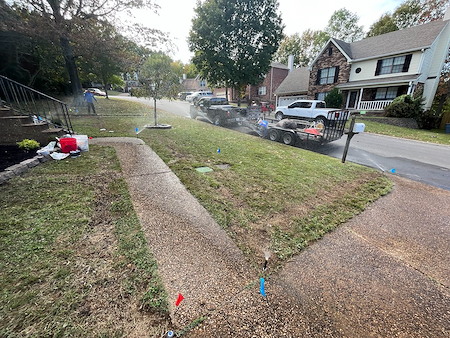
Nashville lawns are beautiful, but they can be tricky. Our warm summers, clay-heavy soils, and rolling lots in areas like Green Hills, Belle Meade, East Nashville, and Sylvan Park make one-size-fits-all lawn irrigation a headache. If you want a greener yard with less waste, the right sprinkler system starts with a design that fits your site, not just a box of parts.
When you work with a pro, you get zoning, head layout, and controls that match your turf, beds, and water pressure. If you’re ready to explore options with a team that handles layout and installation, take a look at our irrigation systems to see how a tailored plan comes together for Nashville homes.
What Makes Nashville Lawns Different
Middle Tennessee has dense clay soils that hold water at the surface, then dry hard in the sun. Add in hillsides across neighborhoods like Donelson, The Nations, and Germantown, and you’ve got two big challenges: runoff on slopes and shallow soaking on hot days.
Rain falls most in winter and spring, yet summer heat pushes lawns to the limit. That’s why the right system balances precipitation rate, nozzle choice, and scheduling. Never mix high‑output spray heads and slow‑rotating rotors in the same zone because they water at different rates and create patchy results.
Sprinkler System Types and Where They Shine
Different areas of your landscape need different tools. A well-designed system blends components so every zone gets even coverage at the right pace.
- Rotors: Good for medium to large open turf. They deliver water slowly and evenly, which helps reduce runoff on gentle slopes.
- High-efficiency rotary nozzles: Ideal for smaller turf with varied shapes. They use less water than fixed sprays while improving uniformity.
- Fixed sprays: Best for small, simple areas that need quick coverage. These require careful tuning to avoid misting and overspray.
- Drip irrigation: Great for garden beds, foundation shrubs, and narrow strips. It targets roots, reduces evaporation, and avoids watering sidewalks.
- Subsurface drip for turf: Useful where overspray must be avoided. It demands expert design and filtration to perform well.
Ask for matched precipitation rates across each zone, so heads apply water evenly regardless of arc or radius. This is a simple design standard that prevents dry spots and saves water all season.
Matching Your Yard to the Right Design
Before a single trench is dug, your contractor should confirm pressure and flow at the hose bib or meter, then map sun, shade, slopes, and plant types. These details inform head spacing, nozzle size, and the number of zones. Clay soils in Nashville benefit from slower application rates and tighter head-to-head coverage, so water has time to sink in.
Your turf areas may need rotors with pressure-regulating heads, while beds might use drip lines with built-in emitters. Corners and curves often call for specialty nozzles to keep water off fences, driveways, and walkways. The goal is uniformity: every square foot should receive the same amount of water on a schedule that your lawn can absorb.
Smart Controls and Water Savings in Middle Tennessee
Modern controllers can adjust watering automatically based on the weather. Wi‑Fi controllers paired with a rain or soil sensor will skip cycles after storms and trim schedules during cooler weeks. Many also support seasonal adjustments for Nashville’s humidity and heat spikes, which help prevent fungus from overwatering in July and August.
If you’ve been searching for “best irrigation contractors near me,” look for a team that programs cycle‑and‑soak on slopes and sets separate schedules for sunny front lawns versus shady backyards. Those small choices make a big impact on turf health and your monthly water use.
Special Considerations for Sloped Lawns in Nashville
Hillsides in places like Belle Meade and parts of Brentwood often need a specialized setup. The phrase you’ll hear from pros is “irrigation design for sloped lawns in Nashville,” and it focuses on lower precipitation rates, pressure regulation, and drainage control.
- Use pressure‑regulated heads and low‑precipitation nozzles to slow delivery so water can soak in.
- Add check valves at low points to stop low‑head drainage after the zone shuts off.
- Split steep areas into smaller zones so you can run shorter cycles with longer soak times.
- Use a drip for beds on slopes to keep water at the roots and off hardscape.
These choices help reduce erosion, stop mulch from washing out, and keep turf healthy on challenging grades.
Water Pressure, Coverage, and Uniformity
Water pressure varies by street and time of day. What matters is the dynamic pressure at the heads while the zone is running. Too much pressure creates mist and drift; too little pressure shortens the throw and leaves dry rings. Pressure‑regulating heads, valves, or a master regulator bring everything back into the sweet spot for your equipment.
Uniform coverage comes from proper spacing and head selection. Head‑to‑head coverage means each spray reaches the next head; this evens out real‑world wind and elevation changes. A professional layout will consider turf shape, obstacles, and the need to keep water off patios and sidewalks to avoid staining and waste.
Installation Materials and Workmanship
Materials matter. Durable valves, swing joints at heads, and properly sized lateral lines help your system last through summers and cold snaps. Controllers and valve boxes should be set level and accessible, and wire splices should be sealed against moisture. Backflow assemblies belong where they can be serviced, and components exposed to winter cold need protection.
Quality installation also shows in clean, compact trenches and careful head setting at grade. Your yard should drain naturally after watering, with no standing puddles. The payoff is a system that’s easier to maintain and delivers the right amount of water year after year.
Seasonal Care So Your System Lasts
Even the best design needs seasonal attention. In late fall, winterization protects pipes and backflow parts from freezing. Spring start‑ups confirm coverage, re‑aim heads after mowing and edging, and refresh controller programs for new daylight patterns. A mid‑summer check makes sure heat, growth, and foot traffic haven’t shifted heads out of alignment.
Routine service also watches for slow leaks, clogged nozzles, and pressure changes that can creep in over time. Small fixes prevent bigger issues like turf fungus or root stress when the weather turns hot and dry.
Why Homeowners Choose GeoScapes
Homeowners across Nashville call GeoScapes because we match design to terrain, plants, and pressure instead of forcing a generic layout. Our team sizes zones to your flow, selects matched nozzles, and programs smart controls that adjust with the season. We also provide clear guidance on care so your lawn stays consistent from spring through football season.
If you want a plan that treats your lawn like a system, not a guess, partner with a crew that builds for long‑term performance and simple upkeep. That means even coverage, fewer surprises, and a yard you’ll be proud to enjoy.
Ready for a reliable sprinkler system that fits your Nashville lawn? Talk with GeoScapes’s landscaping team or book a customized sprinkler system design today at 615-447-8440.
Transform Your Outdoor SpaceContact today for our Landscaping Services!